
Buying plastic block pallets: The sustainable standard for your logistics
An efficient supply chain requires carriers that perform without disruptions. Q-Pall supplies high-quality plastic block pallets that excel in this area. Unlike traditional wooden pallets, our block pallets offer optimal accessibility for forklifts and pallet jacks from all sides thanks to the smart 4-way entry.
Whether it concerns the industry standard (1000x1200 mm) or specific custom solutions: our pallets form a dimensionally stable foundation for storage and transport. They are impervious to moisture, splinter-free, and immediately usable for worldwide export without heat treatment.
+31 (0)413 353 111

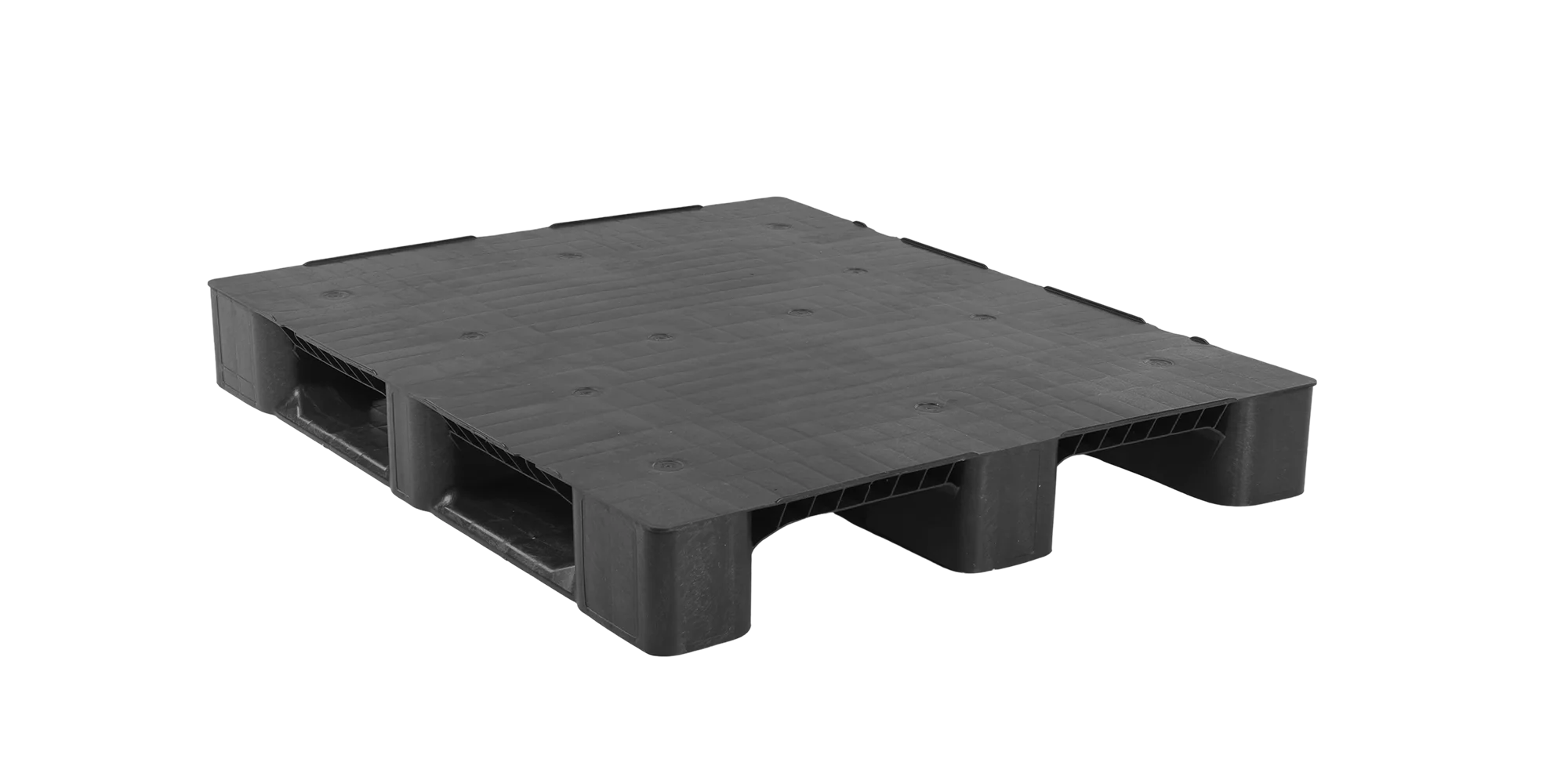
- Dimensions: 1200 x 1000 x 150 mm
- Static: 6000 kg
- Dynamic: 1500 kg
- Racking: 1250 kg
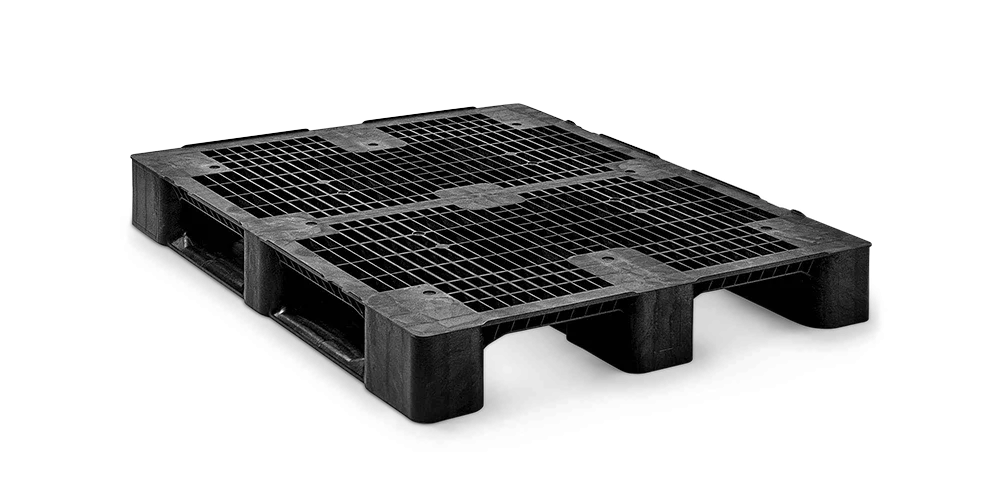
- Dimensions: 1200 x 1000 x 150 mm
- Static: 6000 kg
- Dynamic: 1500 kg
- Racking: 850 kg
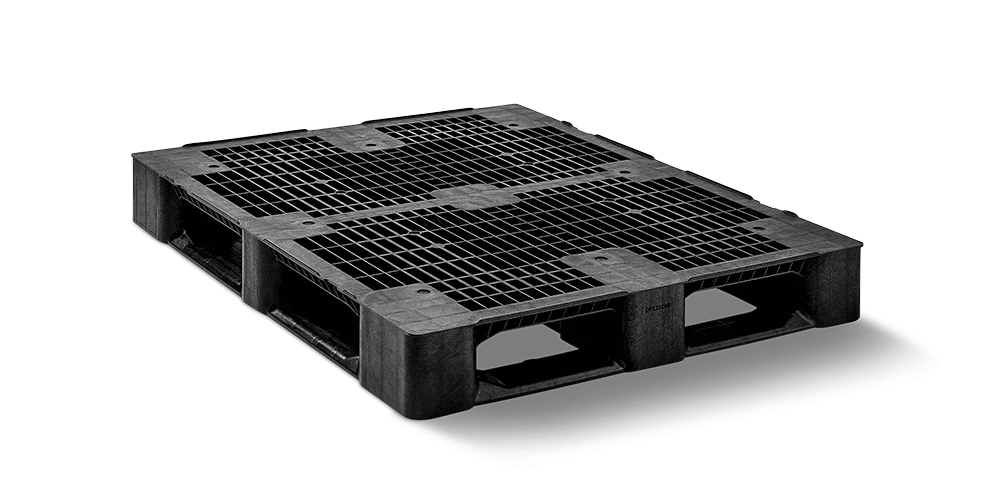
- Dimensions: 1200 x 1000 x 150 mm
- Static: 6000 kg
- Dynamic: 1500 kg
- Racking: 1000 kg
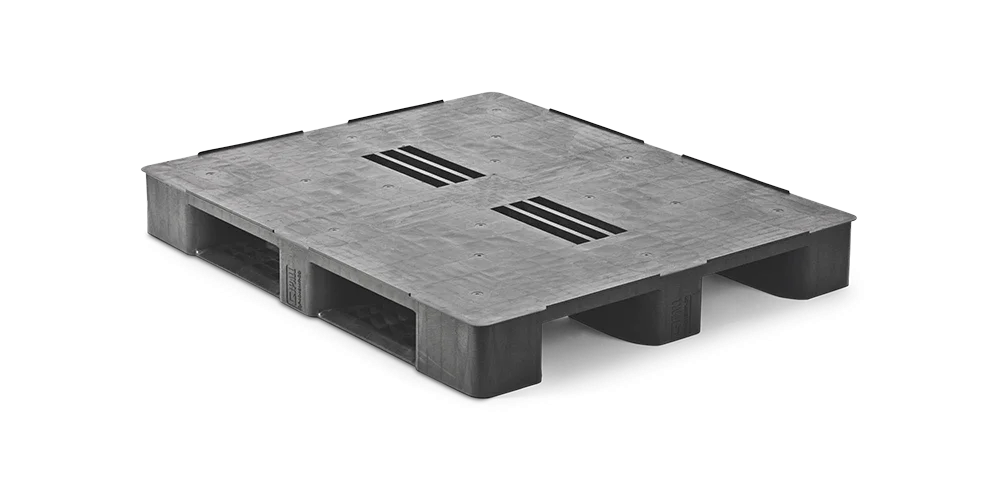
- Dimensions: 1200 x 1000 x 158 mm
- Static: 7500 kg
- Dynamic: 1500 kg
- Racking: 1375 kg
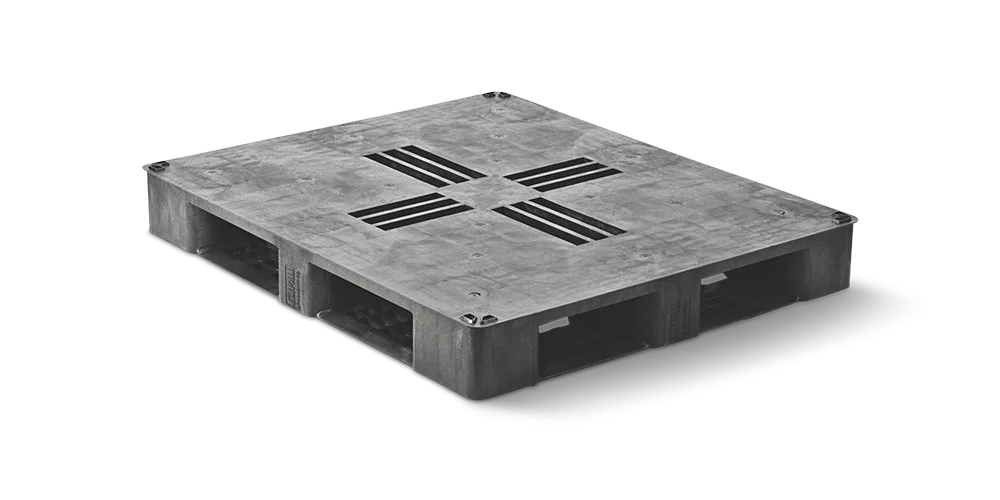
- Dimensions: 1200 x 1000 x 158 mm
- Static: 7500 kg
- Dynamic: 1500 kg
- Racking: 1375 kg
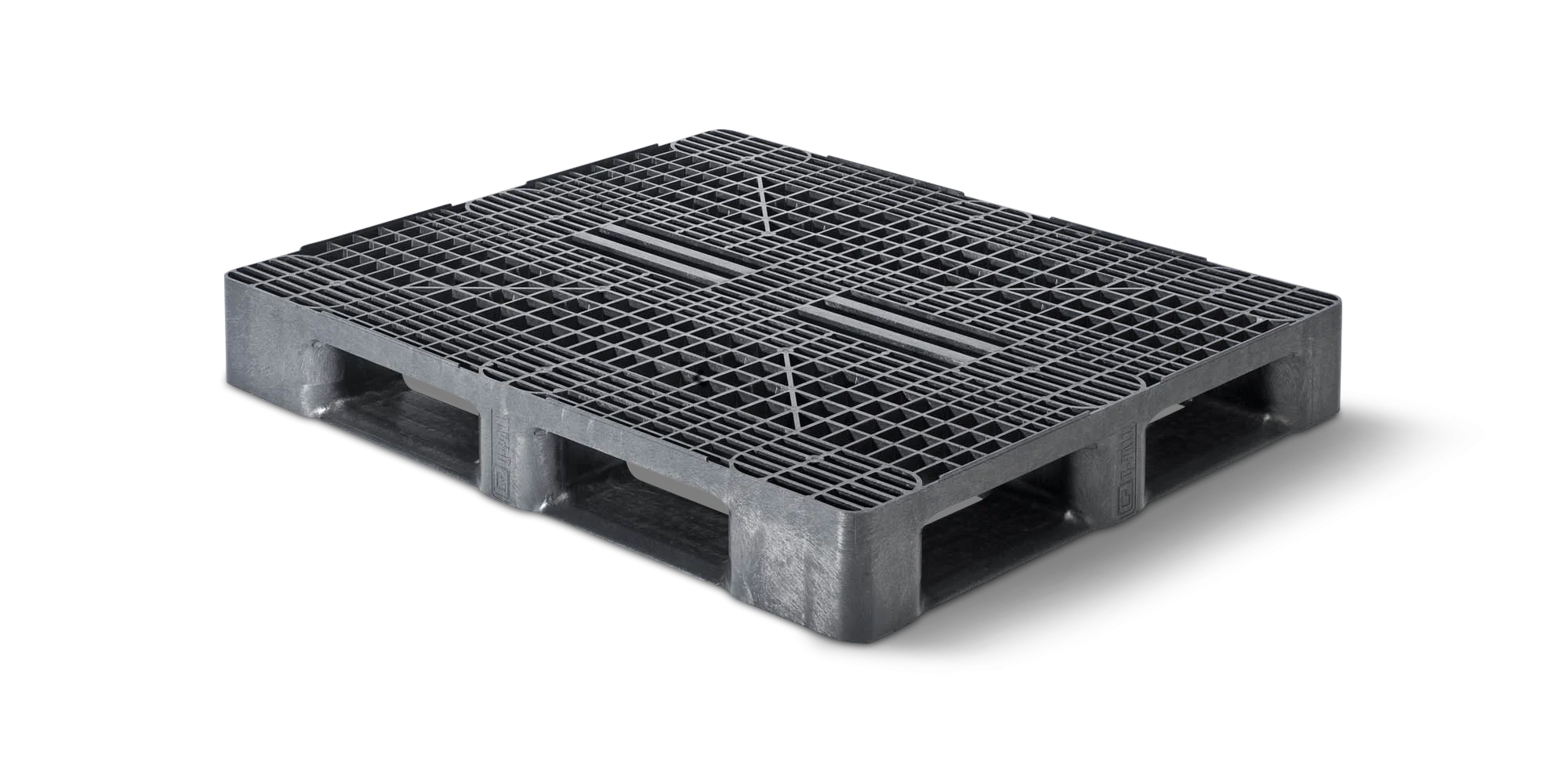
- Dimensions: 1200 x 1000 x 160 mm
- Static: 7500 kg
- Dynamic: 1500 kg
- Racking: 1375 kg
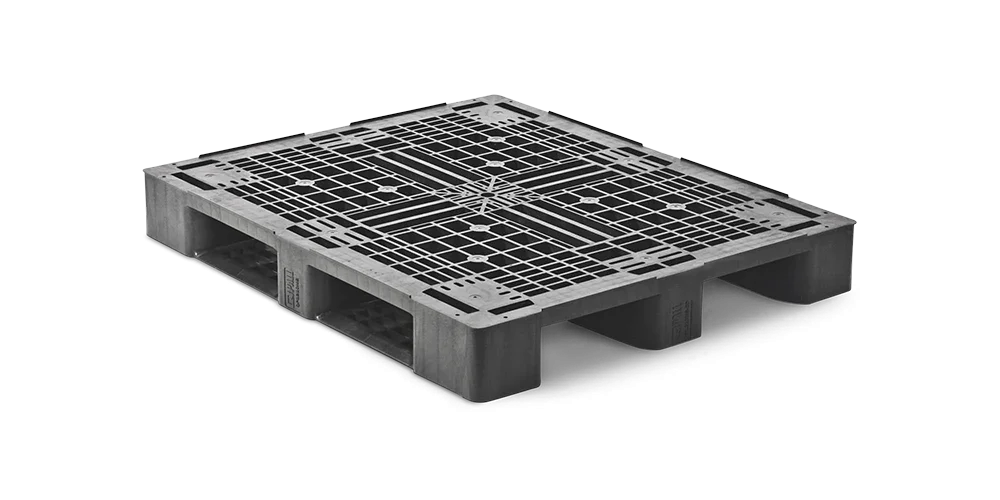
- Dimensions: 1200 x 1000 x 158 mm
- Static: 7500 kg
- Dynamic: 1500 kg
- Racking: 1250 kg
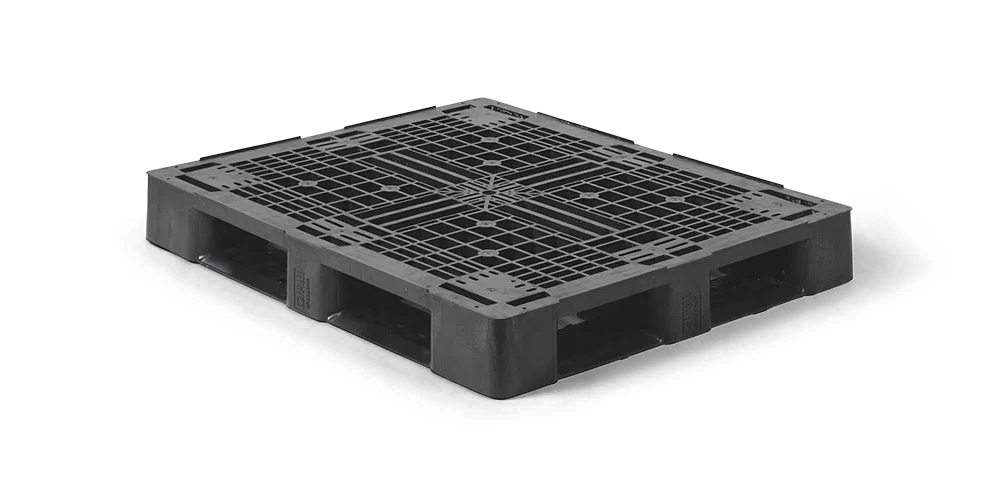
- Dimensions: 1200 x 1000 x 158 mm
- Static: 7500 kg
- Dynamic: 1500 kg
- Racking: 1375 kg
Thanks to their dimensionally stable construction and consistent weight, our plastic block pallets are the logical choice for automated processes. They prevent malfunctions, protect your cargo, and form the foundation for a stable logistics flow.
From new to used block pallets: diversity as standard
Every industry faces specific challenges. That is why the Q-Pall range extends beyond standard sizes. We differentiate our offering into two main lines:
- New plastic block pallets: Ideal for high-care environments (pharmaceuticals, food) where hygiene and extreme dimensional stability are required.
- Used block pallets: The perfect choice for organizations focusing on the circular economy and cost reduction, without compromising on load capacity.
Whether you are looking for lightweight export models or heavy-duty versions for high-bay warehouses: Q-Pall offers logistics flexibility.
The distinctive power of Q-Pall
Q-Pall distinguishes itself through an uncompromising focus on sustainability and usability. Our pallets are used intensively in sectors ranging from the chemical industry to retail. Why do logistics managers choose Q-Pall?
- Circular innovation:
- We give used block pallets a second life. This reduces your carbon footprint and your purchasing costs.
- Quality guarantee:
- Every pallet is checked for load capacity and integrity. Because we exclusively supply plastic, all our carriers are guaranteed free of splinters, nails, and moisture absorption.
- Automation-proof:
- Wooden pallets often deviate in dimensions due to moisture or damage. Our plastic variants guarantee a disruption-free flow in your production lines.
Expertise in quality and reliability
When purchasing block pallets, it is not just about the product, but also about the advice. With years of experience in the plastics industry, Q-Pall acts as a technical partner. We analyze your supply chain to determine whether an open deck, closed deck, nestable, or rackable variant delivers the best return.
Tailored advice or buy block pallets directly?
Are you looking for a supplier who looks beyond just the sale? The Q-Pall team is ready to advise on large volumes, specific applications (such as ESD or hygiene), and fast deliveries.

Frequently asked questions (FAQ)
1. Material choice & application
The exact composition depends on the intended use:
- Standard & pool pallets: Made from recycled material for maximum sustainability and durability.
- Food safety (HACCP): For direct contact with food, we use no recycled material, but exclusively virgin PP or HDPE.
2. Recycling & circularity
Because our pallets consist of 100% plastic, they are fully recyclable at the end of their service life. This supports a circular process: your old pallet becomes the raw material for a new Q-Pall pallet.
Plastic is naturally an insulator, meaning friction can cause a static charge to build up. While this is less dangerous than an ESD discharge, it is highly undesirable for many logistics processes.
1. What are the disadvantages of static charge?
A statically charged pallet acts like a magnet for dirt. This creates two primary problems in the supply chain:
- Hygiene & quality (dust): The charge attracts dust and dirt from the environment. This can affect the quality of the packaging or the product, which is unacceptable, especially in 'clean' environments.
- Shocks & electronics: Employees may experience unpleasant shocks upon contact, and sensitive electronics can be disrupted.
2. The solution: Antistatic additives
To prevent this, Q-Pall can optionally provide your pallets with synergistic antistatic additives.
These additives are mixed into the plastic during production and ensure that the surface resistance is lowered. As a result, static charge cannot build up, keeping the pallet clean (dust-repellent) and safe to use.
Do you experience dust accumulation or static issues in your warehouse? Contact us to discuss the possibilities for antistatic additives.
Skids, often referred to in logistics as runners, determine the stability and usability of a pallet. They ensure the connection with the floor, racking, or conveyor system.
Which configuration do you need?
The choice depends on your storage system and the vulnerability of your load. These are the three most common variants:
- 3 Skids (longitudinal)
Ideal for: High racking & automation.
This is the standard for racking systems. Pallets with three longitudinal skids rest stably on the beams and are perfectly suited for automated conveyor systems. - 5 Skids (perimeter base)
Ideal for: Flexible logistics & pallet Jacks.
This configuration often forms a 'frame' around the perimeter but leaves the center open. This makes it easier for forklifts and pallet jacks to pick up the pallet from all sides, speeding up the process in block stacking scenarios. - 6 Skids (cross deck)
Ideal for: Block stacking & pressure distribution.
This is the heaviest and most stable variant with a full cruciform base.- Maximum pressure distribution: The large surface area at the bottom prevents the pallet from pressing into the underlying load. This prevents damage to boxes or bagged goods.
- Robustness: Due to maximum rigidity, this variant is superior for intensive block stacking.
Are you unsure which base structure fits your warehouse system? Contact us; we are happy to advise you on the right configuration.
Dynamic Load is the maximum weight a pallet can bear while it is in motion. This is the relevant value for internal transport using a forklift or pallet jack.
1. Why is this lower than static load?
When a pallet is moved, additional forces act on the structure. Consider:
- Acceleration & deceleration: The starting and braking of the forklift.
- Lifting & lowering: The pressure peaks during hydraulic lifting.
- Floor irregularities: Shocks caused by thresholds or rough floors.
Due to these external forces, the dynamic load capacity is always lower than the static load capacity (when the pallet is stationary on the ground).
2. The condition: Uniform distribution
Just like with racking load, this value only applies with a uniformly distributed load. If the center of gravity of your load is at a single point, the pallet may tip or break, even if the total weight remains below the limit.
The carbon footprint of a plastic pallet expresses the total environmental impact in kilograms of CO2 equivalent (kg CO2 eq.). To make this impact transparent for you, official Environmental Product Declaration (EPD) documents are available for all Q-Pall pallets.
1. What does this emission consist of?
Greenhouse gas emissions occur at various stages of the life cycle. The greatest impact usually arises during:
- Raw material extraction: Obtaining the base material.
- Production: Energy consumption during the injection molding of the pallets.
- Transport: Logistics from raw material to factory and from factory to customer.
2. How Q-Pall reduces CO2
We minimize these emissions at every step of the process. By making intensive use of recycled plastics and organizing the 'end-of-life' process (full recycling of old pallets), we significantly lower the ecological footprint compared to wooden alternatives or virgin plastic.
Do you want to dive deeper into our sustainability strategy? Read all about our vision on recycling and reduction in our Orange Values.