
Reading time: 2 minutes
Executive summary
The Stack-Up Pallet is a new plastic pallet developed by Kwakman Afbouw and Q-Pall, designed to reduce waste, physical strain and inefficiency on construction sites. By combining nestable design, ergonomic height and early-phase hoisting, the pallet cuts walking movements by 70%. Launch is planned for Q1 2027.
Contents
Why the job site needed a better pallet
Wooden pallets have long been the default in construction. Not because they're the best option, but because nothing better was widely available. They're heavy, hard to stack efficiently, and create unnecessary handling time on site. For Kwakman Afbouw, one of the Netherlands' most innovative finishing contractors, that was a problem worth solving to improve operational efficiency.
How the Stack-Up Pallet works
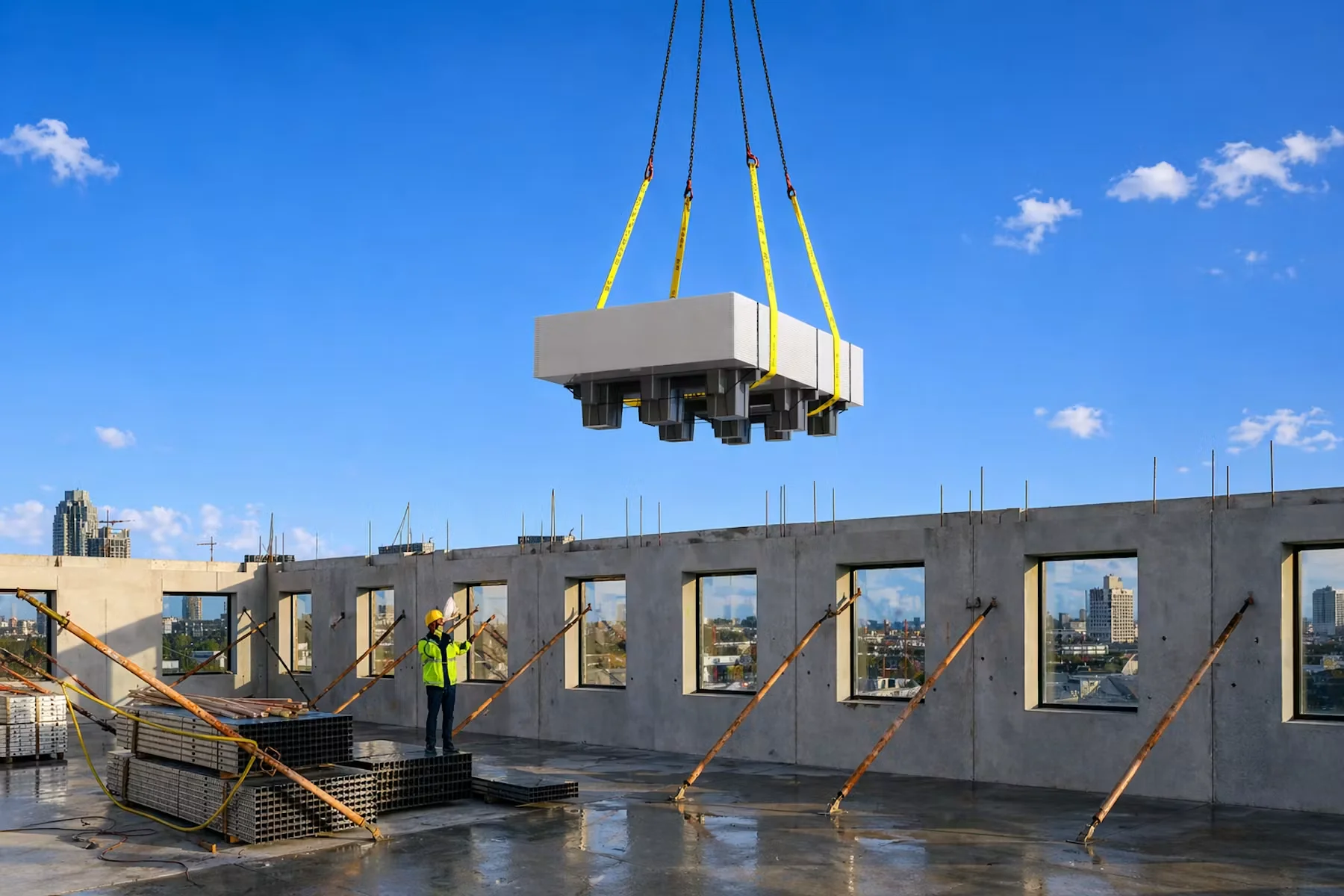
Each Stack-Up Pallet holds forty plasterboard sheets. The nestable design means five to six times more pallets fit in a return load, cutting transport costs and manpower. Pallets are hoisted to their destination during the shell phase, so materials arrive exactly where they're needed, before finishing crews start. The result: 70% fewer walking movements on site, less physical strain, and a cleaner, faster workflow.
Circular by design
Q-Pall produces plastic pallets from 100% recycled HDPE. The Stack-Up Pallet is dismantlable and built for multiple project cycles, fully in line with Q-Pall's circular approach to pallet production.
What this means for contractors
Early pilots have been well received. The Stack-Up Pallet launches in Q1 2027.
Want to know whether plastic pallets can improve your process?
We're ready to explore it with you. Call us at +31 (0)413 353 111, we're happy to think along.
Contact our experts via email