
Can plastic pallets go in the freezer?
Yes. Plastic pallets stay strong and dimensionally stable at low temperatures, also in freezer rooms and cold storage warehouses. However, plastic becomes stiffer in frost and more sensitive to hard impacts. So drive carefully, avoid knocks with the forks and take a damaged pallet out of use straight away.
The same goes for the material itself. Our standard pallets are made of recycled plastic, a mix of HDPE and PP (light pallets also contain LDPE). HDPE is stiff and tough and stays that way at freezing temperatures. We make hygienic pallets from virgin plastic.
Two things to keep in mind:
- Load ratings. We determine the static, dynamic and racking load at an ambient temperature of 20 °C. We assess different conditions, such as long-term storage in a freezer room, separately.
- Handling. Most damage happens when driving with a forklift or pallet truck. In the cold, an impact does damage more quickly. Read about the main driving mistakes in 9 common mistakes that damage plastic pallets.
Which temperatures apply in cold stores and freezer rooms?
Store frozen products at -18 °C or colder. Store chilled products as stated on the label; if no temperature is given, the Dutch food safety authority NVWA applies 7 °C or lower. So the pallet works at those temperatures all day, and often also goes into a warmer loading area.
| Environment | Temperature | Source | What to watch with the pallet |
|---|---|---|---|
| Cold store | 7 °C or lower, unless the label says otherwise | NVWA (Netherlands, in Dutch) | Condensation, cleaning, air circulation |
| Freezer room | -18 °C or colder | NVWA (Netherlands, in Dutch) | Avoid impacts, freeze evenly |
| Q-Pall load test | 20 °C | Q-Pall | Assess different conditions separately |
Do you monitor the temperature throughout the chain? Pallets can also supply data themselves. Retailer Auchan used smart Q-Pall Euro pallets that measure location, temperature and shocks, among other things.
What does moisture do to a pallet in a cold store?
With a plastic pallet, very little. Plastic does not absorb moisture, rot or go mouldy, and does not deform due to moisture. Wood is porous: it absorbs moisture, can go mouldy and does not keep a constant size and weight when moisture and temperature change. Cardboard goes limp from condensation.
In a cold store or freezer room, condensation almost always plays a role, especially when pallets move between cold and warmer areas. That makes the material important:
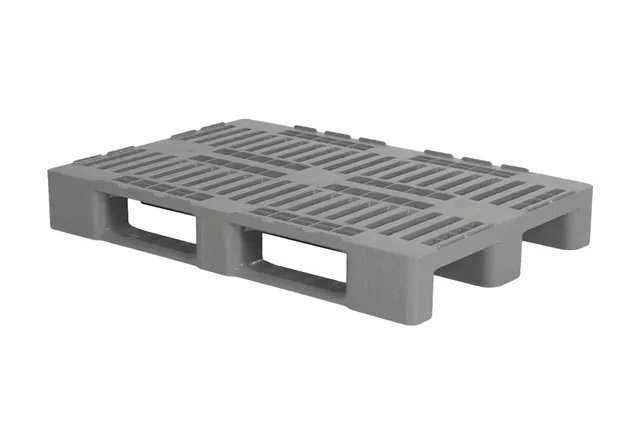
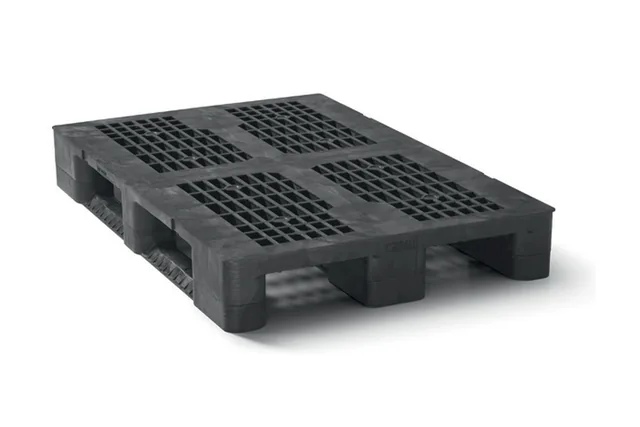
- Open deck. Moisture drains away and air circulates around the load. Useful for cooling and for products that need to dry.
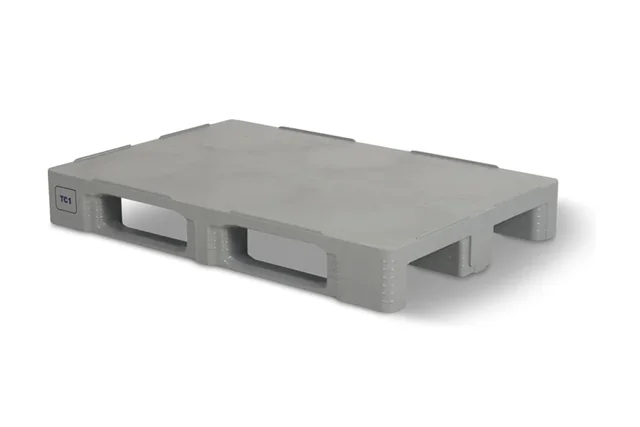
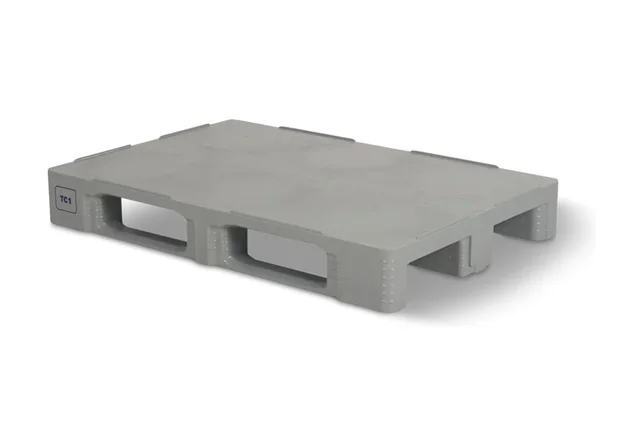
- Closed deck. Flat and solid, so small packages cannot fall through and you can clean the pallet quickly.
- Cleaning. Plastic pallets can withstand water, high pressure and cleaning agents. Ask us about the maximum temperature and suitable agents per model. Read how to go about it in cleaning plastic pallets.
- Waiting outside. If pallets stand outside for a while or in a wet loading area, that is no problem for plastic.
Can plastic pallets go into racking in a freezer room?
Yes, if you choose a medium or heavy pallet with runners and keep a wide margin. Light pallets and display pallets are not intended for racking. Because the racking load is determined at 20 °C and plastic becomes stiffer and more sensitive to impacts in the cold, careful driving in the freezer room is extra important.
As an indication, the racking load of our pallets with runners:
- Medium pallets: 200 to 1,375 kg, depending on size and version. Square medium pallets are at the lower end of that range.
- Heavy pallets: 800 to 2,000 kg.
- Hygienic pallets: 1200 x 800 mm up to 1,750 kg and 1200 x 1000 mm up to 2,000 kg.
Place the pallet with the runners at right angles to the beams, and regularly check pallets that often move between the freezer room and the loading area for cracks or deformation.
How do freezer spacers work?
A freezer spacer is a plastic grid that you place between the layers of boxes on a pallet. This creates air channels through which cold air flows. The boxes in the middle of the load then also cool down faster, so the whole pallet freezes faster and more evenly.
Q-Pall supplies freezer spacers made of HDPE in three types:
| Type | Size | Height | Weight |
|---|---|---|---|
| Type I | 1200 x 800 mm | 50 mm | 2.9 kg |
| Type I | 1200 x 1000 mm | 50 mm | 3.6 kg |
| Type II | 1200 x 800 mm | 50 mm | 2.7 kg |
| Type II | 1200 x 1000 mm | 50 mm | 3.3 kg |
| Type III | 1200 x 800 mm | 50 mm | 2.2 kg |
Each spacer adds 50 mm to the height of the load. Take that into account when you determine the loading height or the height of the racking bay. Spacers do not absorb moisture or odours and can withstand pressure washing, so you can use them again and again. Thawing and tempering also run more evenly.
Which plastic pallet should you choose for cold and frozen storage?
Choose on the basis of hygiene, load and process. If food goes directly on the pallet, choose a hygienic pallet made of virgin plastic. If everything is packaged, a pallet made of recycled plastic is often enough. If the pallet goes into racking, look at the racking load and keep a wide margin.
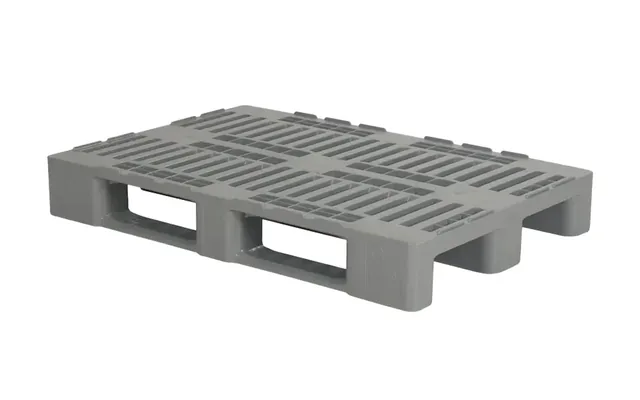
- Direct food contact: hygienic pallets and the H1 Euro pallet made of virgin plastic. The H1 Euro pallet measures 1200 x 800 x 160 mm, weighs 18 kg and has an open deck on 3 runners, so moisture can drain away. Pallets made of recycled plastic are not intended for direct contact with food.
- Packaged products: a standard pallet made of recycled plastic, with an open or closed deck.
- Racking storage in the freezer room: a medium or heavy pallet with runners. Read how to choose in plastic pallets in pallet racking.
- Fast freezing: combine the pallets with freezer spacers between the layers.
Read more about the requirements in your sector in plastic pallets for the food industry. Not sure which pallet suits your cooling or freezing process? Contact us.