
How long does a plastic pallet last?
With normal use, a plastic pallet lasts for many years, much longer than an average wooden pallet. For a heavy-duty plastic pallet, eight to fifteen years is a realistic range. Where you end up mainly depends on how often the pallet circulates, how heavily it is loaded and how it is driven.
Plastic does not rot, does not split and does not absorb moisture. There are no boards or nails that can work loose. Wear and damage therefore mainly come from use: knocks with the forklift, overloading and incorrect stacking.
In a pallet pool, a pallet makes dozens or hundreds of trips. Then the service life counts for more than the purchase price. So calculate in cost per trip: divide the total cost of the pallet by the number of times you use it.
What are the key figures on lifespan and recycling?
The key figures at a glance: how long a heavy-duty pallet lasts, how often a pallet circulates in a pool, how much a used pallet saves, how much recycled plastic Q-Pall processes and what the European packaging regulation PPWR requires on reuse and recyclability from 2030.
| Topic | Figure |
|---|---|
| Lifespan of a heavy-duty plastic pallet | 8 to 15 years, depending on use |
| Trips of a pallet in a pool | Dozens to hundreds |
| Used pallet through Q-Used | Up to 40% cheaper than new |
| Recycled plastic processed by Q-Pall in 2025 | 34,500 tonnes, about 1,475 full trucks |
| PPWR: reusable transport packaging within the EU from 2030 | At least 40% |
| PPWR: recyclability of packaging from 2030 | At least grade C (70% or higher) |
What determines the lifespan of a plastic pallet?
The lifespan depends on four things: whether the pallet suits your application, how heavily you load it, how forklifts and pallet trucks are driven and the environment it is used in. Most damage happens during handling, not during storage.
- The right load class. Light pallets are intended for export and one-off shipments, not for pallet racking. For intensive use, pools and racking, choose a medium or heavy pallet.
- Load with a margin. Every pallet has a static, a dynamic and a racking load. These apply to an evenly distributed load. Point loads and uneven distribution reduce the usable capacity. See the load capacity of plastic pallets.
- Driving. Turning away before the forks are out of the pallet, tilted forks and pushing pallets across the floor are well-known causes of damage.
- Temperature. At low temperatures, plastic becomes stiffer and more sensitive to impacts. At high temperatures, it becomes slightly more flexible.
- Cleaning. Plastic can withstand water, high pressure and cleaning agents. But only use agents and temperatures that are suitable for the model. See cleaning and disinfecting plastic pallets.
How do you extend the lifespan of your pallets?
Choose a pallet with an ample load rating, train staff in how to pick up a pallet with a forklift and pallet truck, and check the pallets at fixed moments. These three measures prevent most of the damage. They cost little and give you more trips per pallet.
Practical points for the shop floor:
- Enter the pallet with horizontal forks and only turn away when the forks are completely out of the pallet.
- Keep the centre distance between the forks at about 60% of the width of the pallet.
- Do not drive too low, so that the pallet does not touch the ground at a threshold or slope.
- Do not throw empty pallets or push them across the floor. Stack them neatly.
- Place pallets in the racking with the runners at right angles to the beams.
- Stacking loaded pallets? Keep the total weight on the bottom pallet within the static load.
See more examples in 9 common mistakes that damage plastic pallets.
When does a pallet need replacing?
Take a pallet with cracks or breaks out of circulation. A damaged pallet can fail under load, putting the load and staff at risk. Repairing plastic pallets is relatively expensive. That is why companies usually choose to have broken pallets recycled.
Make the check part of a fixed moment, for example during cleaning or when return pallets come in. Pay particular attention to the areas that the forks and the floor touch: the fork openings, the corners and the underside. If a pallet raises doubts, stop using it for heavy loads or in racking.
What happens to a pallet when you no longer use it?
Reuse first, then recycling. A pallet that you no longer need but that is still in good condition can get a second life through Q-Used. A broken pallet is ground into raw material for new pallets. That keeps the plastic in the loop and less new raw material is needed.
That order matches the waste hierarchy in the European Waste Framework Directive (2008/98/EC). It puts five steps in order: prevention, preparing for reuse, recycling, other recovery such as energy recovery, and only as a last resort disposal.
- Reuse. With Q-Used, we buy used plastic pallets, inspect them and sell them again. Every pallet is checked for damage and construction. A used pallet needs no new raw material and no energy for production.
- Take-back and recycling. When your Q-Pall pallets reach the end of their life or are damaged, we take them back and grind them into raw material for new pallets. How that works depends on the number of pallets and where they are.
How are plastic pallets recycled?
A discarded pallet is ground up, the material is checked and cleaned, and then injection-moulded into a new pallet. Our standard pallets consist of related plastics, HDPE and PP, which behave in a similar way in recycling. So the material of an old pallet can become the raw material for a new one.
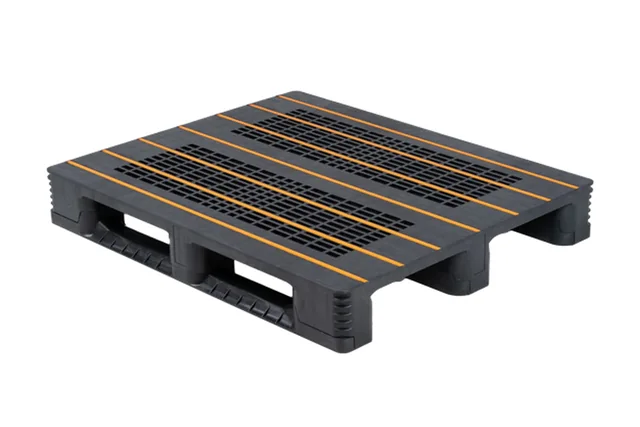
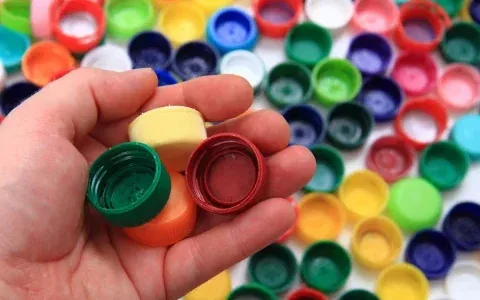
We make our standard pallets from nearly 100% recycled plastic from waste streams including crates, caps and packaging. Light pallets also contain LDPE. The design helps with recycling too. Our heavy-duty pallets need no metal reinforcements. The anti-slip strips on our new medium pallets go through the same recycling process as the pallet itself, so you do not need to remove them.
Check the composition when you buy. Pallets made of plastics with RIC code 7, the catch-all category for other plastics and combinations, are often difficult to recycle. Read how the process works step by step in recycling plastic pallets.
What does the PPWR require of pallet lifespan?
Since 12 August 2026, the European packaging regulation PPWR, Regulation (EU) 2025/40, has applied. Pallets fall under it as transport packaging. From 2030, at least 40% of transport packaging within the EU must be reusable, and packaging must be designed for recycling. A long-lasting, recyclable pallet meets both requirements.
- Reuse. If you ship between your own sites, within your group or between companies in the same member state, 100% reuse applies in principle from 2030, with some exemptions.
- Recyclability. From 2030, packaging must achieve at least grade C: 70% or higher on the recyclability scale.
- Documentation. Q-Pall has EU declarations of conformity per pallet group. For most models, you can download them from the product page.
Read more in PPWR and plastic pallets.
Want us to take back old Q-Pall pallets, or looking for used pallets? Contact us.