
How do you clean a plastic pallet?
Empty the pallet, remove loose dirt, pre-rinse with water and clean with a suitable agent and a brush or pressure washer. Then rinse away all residues, disinfect if your hygiene plan requires it and let the pallet dry thoroughly. Plastic does not absorb water, so it dries quickly.
The method in four stages:
1. Prepare
- Remove the load, film, labels, tape and other residues from the pallet.
- Check the pallet for damage. Take a pallet with cracks or breaks out of circulation.
- Sweep or blow away dry dirt before you use water.
2. Clean
- Pre-rinse the pallet with water to remove coarse dirt.
- Clean with a suitable agent and a brush or pressure washer. Pay extra attention to corners, seams and fork openings.
- Rinse with clean water until no cleaning agent is left.
3. Disinfect, if needed
- Use an approved disinfectant and follow the label.
- Only do this on a pallet that has been cleaned and rinsed.
4. Dry and store
- Let the pallet dry thoroughly, so that no water is left standing on it.
- Store it clean and dry, separate from dirty pallets.
What is the difference between cleaning and disinfecting?
Cleaning removes dirt, grease and residues of product and cleaning agent. Disinfecting kills micro-organisms that remain after cleaning. That is why disinfecting always comes after cleaning and rinsing. Not every pallet needs to be disinfected: you decide that in your hygiene plan.
For food businesses, this is laid down in Regulation (EC) No 852/2004. Under Annex II, articles and equipment that come into contact with food must be effectively cleaned and, where necessary, disinfected, often enough to avoid contamination. Conveyances and containers used to transport food must be clean and in good condition. The European Commission gives an overview of the rules under food hygiene legislation.
Disinfectants are biocides. In the Netherlands, the Ctgb decides which biocides may be sold and used. You must use an approved product according to its label. Approved products are listed in the Ctgb authorisations database; see authorisation of pesticides on Rijksoverheid.nl, the Dutch government website (in Dutch).
Which agents and temperatures can you use?
Plastic pallets can withstand water, high-pressure cleaning and cleaning agents. HDPE and PP are resistant to many acids, alkalis and solvents. There is no single maximum temperature for all pallets: it varies per model. So ask us about the maximum temperature and the suitable agents for the model you use.
A few points to watch:
- Temperature. At high temperatures, plastic becomes slightly more flexible. After a hot wash, let a pallet cool down and dry before you load it again.
- Residues. Always rinse off cleaning agent thoroughly. Residues can reach the product on the pallet.
- Environment. Use cleaning agents that are not harmful to the environment and make sure the used water is drained away properly.
Which pallet is the easiest to clean?
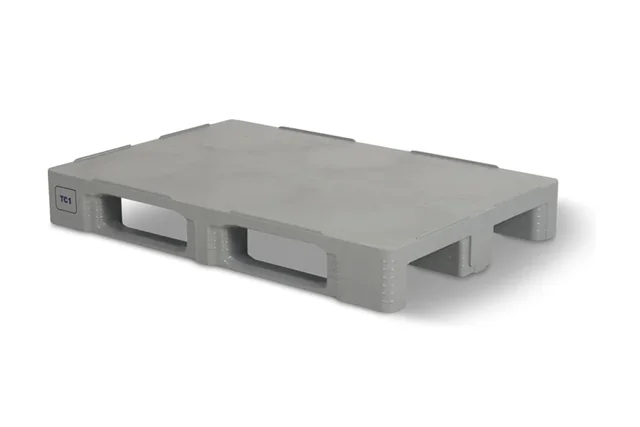
The smoother and more closed the pallet, the faster it is clean. A closed deck has no openings where dirt can stay behind, and moisture stays on the deck where you rinse it off. With an open deck, moisture drains away, but dirt is more likely to stay in the openings. Of our 89 pallet models, 34 have a closed deck.
| Version | Example from our range | Weight | When cleaning |
|---|---|---|---|
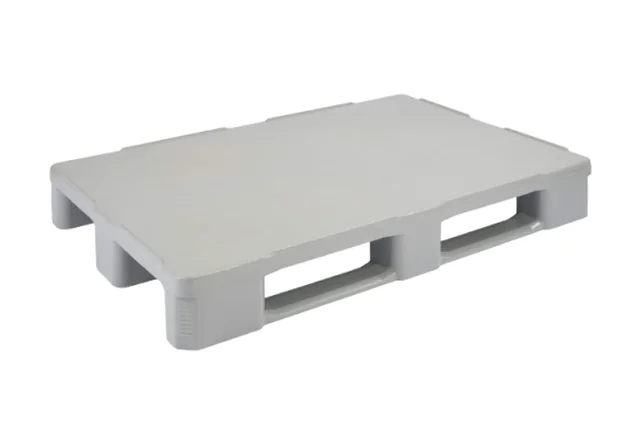
| Hygienic pallet, closed deck, 3 runners | 1200 x 800 x 160 mm | 18 kg | Smooth and closed, quickly and thoroughly clean |
| H1 Euro pallet, open deck, 3 runners | 1200 x 800 x 160 mm | 18 kg | Moisture drains away, watch the openings |
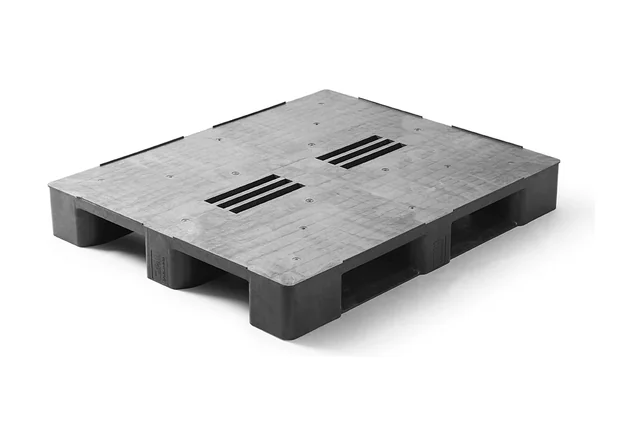
| Cleanroom pallet, closed deck, 5 runners | 1200 x 1000 x 160 mm | 26 kg | Clean before it enters the cleanroom |
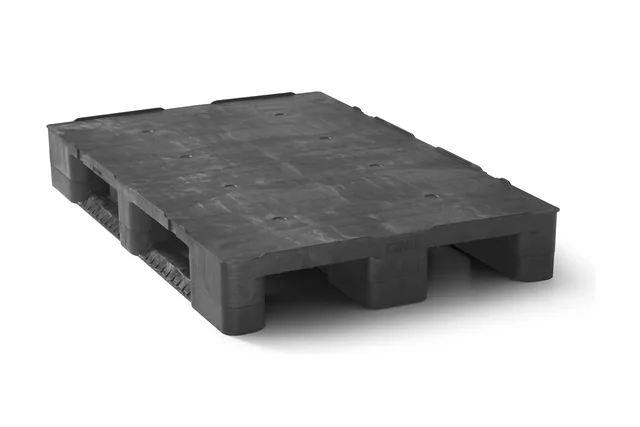
| Medium pallet, closed deck, 3 runners | 1200 x 800 x 145 mm | 13.8 to 14 kg | Flat deck, recycled plastic, for packaged products |
| Light pallet, open deck, 9 feet | 1200 x 800 x 150 mm | 5.1 to 5.4 kg | Easy to handle, more openings and corners |
The hygienic pallets have an extra careful finish, with as few seams and corners as possible. They are made of virgin plastic. You can read when you need such a pallet in hygienic pallets and HACCP.
Clean them yourself or use a pallet washer?
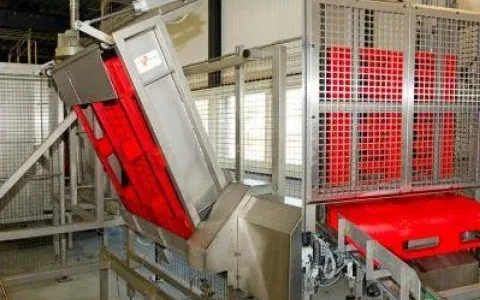
For small numbers of smooth pallets, cleaning them yourself with water, a cleaning agent and a brush or pressure washer is a good choice. For large numbers, a pallet washer or a specialist pallet cleaning service is more practical. A machine cleans many pallets in a short time, with a consistent result.
Cleaning them yourself. Choose a fixed place that is allowed to get wet and where the used water can be drained away properly. Keep clean and dirty pallets apart.
Outsourcing or machine cleaning. Pallet washers often have a pre-wash and a main wash zone, dry the pallets and can also disinfect. Many cleaning services collect the pallets and return them clean. For large numbers, as in the food industry, that is often the practical solution.
How do you record cleaning in your hygiene plan?
If you work according to HACCP, record how often you clean the pallets, with which agents and concentrations, whether you disinfect and who checks the result. Record when each batch was cleaned. That way you can show during an inspection that cleaning is under control.
- Frequency. There is no fixed interval. Decide per flow how often cleaning is needed: after every cycle, daily or weekly.
- Cleanroom pallets. Clean them before they enter the controlled environment. Read more about this for the pharmaceutical industry.
- Damage check. Combine cleaning with an inspection. A damaged pallet can fail under load. See also service life and recycling of plastic pallets.
Want to know which model best suits your cleaning process, or what temperature a model can handle? Contact us.