
What is a CP pallet?
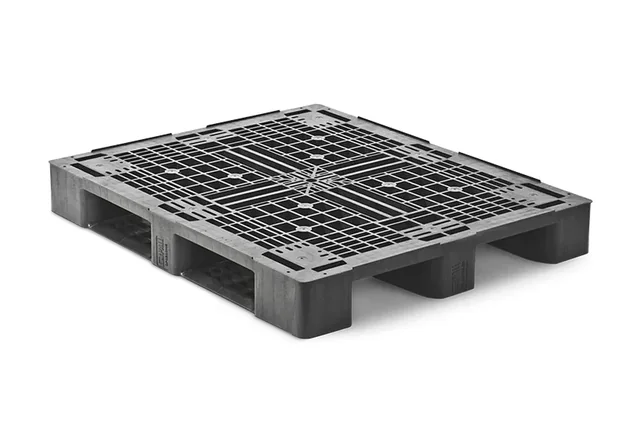
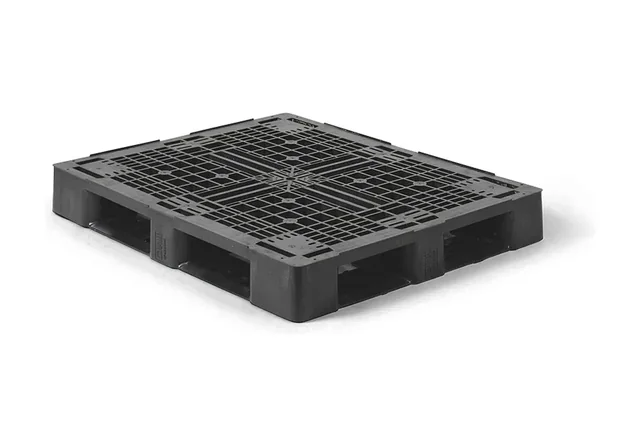
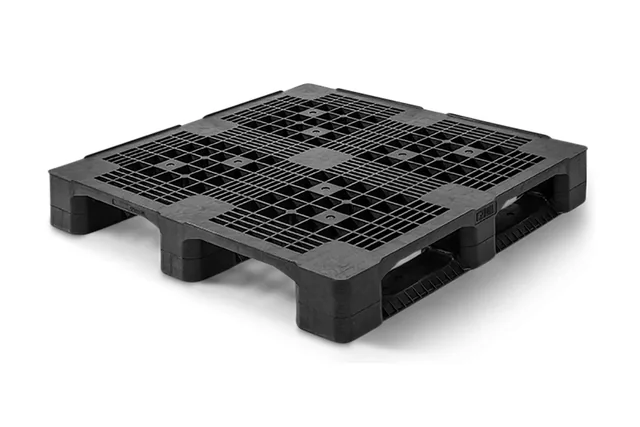
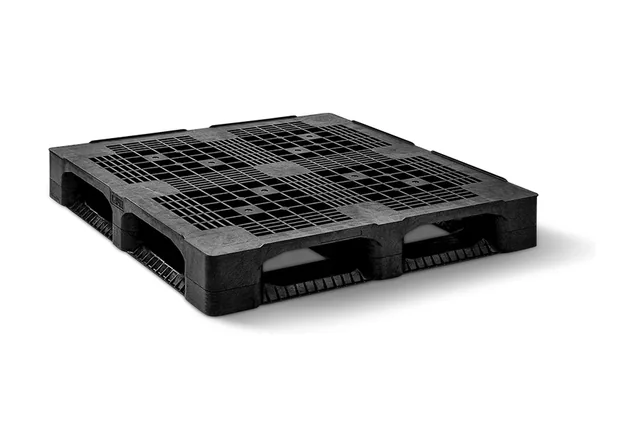
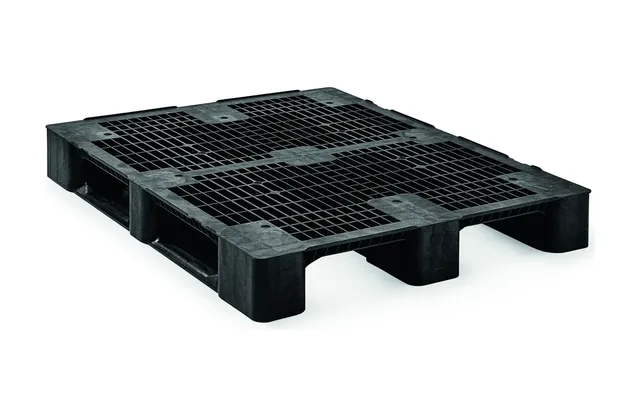
A CP pallet (Chemical Pallet) is a standardised pallet for the chemical and plastics industry. There are nine types, from CP1 to CP9, each with a fixed size and construction. That way, supplier, carrier and customer know exactly which pallet they get and how it fits their installation.
The CP pallets were originally developed to standardise the range of pallets in the European chemical industry. Today, other industries use them too, for drums of liquids, bagged goods, octabins and big bags. Big bags mainly carry raw materials, such as powders, pellets and granulate.
Which CP sizes are there?
Together, the nine CP pallets have five footprints. CP1 and CP6 are 1200 x 1000 mm, CP2 is 1200 x 800 mm, CP3, CP8 and CP9 are 1140 x 1140 mm, CP4 and CP7 are 1300 x 1100 mm and CP5 is 760 x 1140 mm. They also differ in height and base.
| Type | Footprint (mm) | Height of wooden EPAL CP pallet | Typical use | At Q-Pall |
|---|---|---|---|---|
| CP1 | 1200 x 1000 | 138 mm | Bagged goods, boxes | Yes: medium and heavy, 3 runners |
| CP2 | 1200 x 800 | 138 mm | Bagged goods, boxes | Same size: 1200 x 800 mm |
| CP3 | 1140 x 1140 | 138 mm | Drums, octabins, big bags | Yes: medium and heavy, 3 runners |
| CP4 | 1100 x 1300 | 138 mm | Bagged goods | Same size: 1300 x 1100 mm |
| CP5 | 760 x 1140 | 138 mm | Bagged goods, sea containers | Same size: 760 x 1140 mm |
| CP6 | 1200 x 1000 | 156 mm | Bagged goods, boxes | Yes: heavy, perimeter base |
| CP7 | 1300 x 1100 | 156 mm | Bagged goods | Same size: 1300 x 1100 mm |
| CP8 | 1140 x 1140 | 156 mm | Big bags | Ask about the options |
| CP9 | 1140 x 1140 | 156 mm | Drums, octabins, big bags | Yes: medium and heavy, perimeter base |
The heights are those of the wooden CP pallets from EPAL. In specifications, some sizes are written the other way round, such as 1000 x 1200 mm for the CP1. The footprint is the same.
What is the difference between CP1 and CP6, and between CP3 and CP9?
The footprint is the same, the base is not. CP1 and CP3 have 3 runners. CP6 and CP9 have a base that runs all the way round, also called a perimeter base: at Q-Pall, these are 6 runners that close the underside all round. Wooden CP6 and CP9 pallets are also higher than CP1 and CP3.
What that means in practice:
- 3 runners give a stable base on the floor and on roller conveyors. In racking, you place the pallet with the runners at right angles to the beams.
- A perimeter base gives the load more support and spreads the weight more evenly over the surface below.
Which base you need often depends on your conveyors and racking. So do not just look at the CP number, but also at how your installation picks up and carries the pallet.
Which CP pallets does Q-Pall make in plastic?
Q-Pall makes the popular CP1, CP3, CP6 and CP9 as genuine CP pallets in plastic. CP1, CP3 and CP9 come in medium and heavy, CP6 in heavy. For CP2, CP4, CP5 and CP7, there is a plastic pallet in the same size. The values per model:
| Type | Class | Dimensions (mm) | Weight | Static | Dynamic | Racking | Per stack |
|---|---|---|---|---|---|---|---|
| CP1 | Medium | 1200 x 1000 x 150 | 15.6 kg | 5,000 kg | 1,500 kg | 750 kg | 17 |
| CP1 | Heavy | 1200 x 1000 x 158 | 20.5 kg | 7,500 kg | 2,000 kg | 1,375 kg | 15 |
| CP6 | Heavy | 1200 x 1000 x 158 | 21.5 kg | 7,500 kg | 2,000 kg | 1,375 kg | 15 |
| CP3 | Medium | 1140 x 1140 x 150 | 13.6 kg | 7,500 kg | 1,375 kg | 300 kg | 17 |
| CP3 | Heavy | 1140 x 1140 x 165 | 21.9 kg | 7,500 kg | 2,000 kg | 1,250 kg | 15 |
| CP9 | Medium | 1140 x 1140 x 150 | 14.3 kg | 5,000 kg | 1,500 kg | 300 kg | 17 |
| CP9 | Heavy | 1140 x 1140 x 165 | 24.6 kg | 7,500 kg | 2,200 kg | 1,250 kg | 15 |
The load ratings apply to an evenly distributed load. Mind the height: the plastic CP pallets are 150 to 165 mm high, wooden EPAL CP pallets 138 or 156 mm. If you work with an automated line, check that the height fits. You can see all versions under CP pallets.
Medium or heavy CP pallet?
Choose medium for normal loads and floor storage. Choose heavy if the pallet goes into racking, if you transport heavy drums or big bags, or if the pallet circulates often. A heavy CP pallet carries up to 7,500 kg static, 2,200 kg dynamic and 1,375 kg in racking.
The biggest difference is the racking load: 300 to 750 kg for medium, 1,250 to 1,375 kg for heavy. In racking, the pallet rests only on two beams and the middle is unsupported. That is why this value is often the decisive one. Read more about the load capacity of plastic pallets.
Why a plastic CP pallet instead of wood?
A plastic CP pallet has no nails, splinters or loose boards that damage bags, big bags or drums. It leaves no wood fibres in your product, does not absorb moisture and has a constant weight. So it works well with palletising robots and on roller conveyors.
For comparison: a wooden EPAL CP3 pallet consists of 15 boards, 9 blocks and 81 nails. An injection-moulded plastic pallet has no loose joints. Also:
- Resistant to moisture and many chemicals. Plastic does not absorb liquid or rot, and HDPE and PP are resistant to many chemical substances. If you work with aggressive substances or solvents, ask whether the pallet is suitable for your substance.
- No ISPM 15. Plastic pallets do not need to be treated or stamped for export.
- Long service life and recyclable. A plastic CP pallet lasts many years in normal use and is fully recyclable afterwards.
Read more about pallets for this sector in the chemical industry.
Which CP pallet suits your load?
Start with the packaging. Square loads such as big bags, octabins and drums are best placed on CP3 or CP9 of 1140 x 1140 mm. Bagged goods and boxes go on CP1 or CP6 of 1200 x 1000 mm. For large pallets of bagged goods there is 1300 x 1100 mm, and for sea containers 760 x 1140 mm.
- Big bags, octabins, drums: CP3 or CP9, in heavy for heavy loads.
- Bagged goods and boxes: CP1 or CP6, or CP2 in 1200 x 800 mm.
- Bulky bagged goods: 1300 x 1100 mm (CP7, or CP4 turned round). All models in this size carry 7,500 kg static and 1,375 kg in racking.
- Sea containers: 760 x 1140 mm (CP5). Up to 31 pallets fit in a 40 ft container. These are light pallets, not intended for racking.
Not sure which CP pallet suits your load and installation? Request a quote and we will help you think it through.